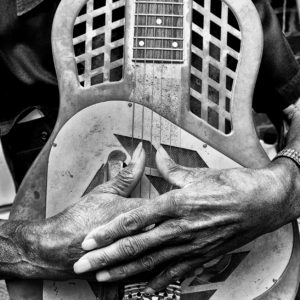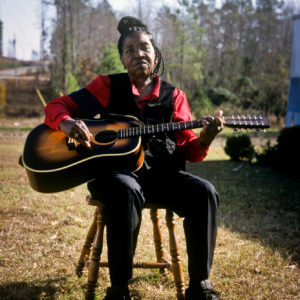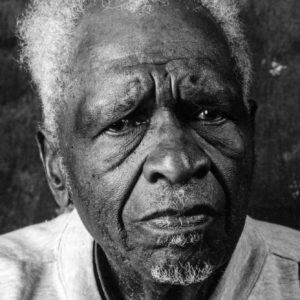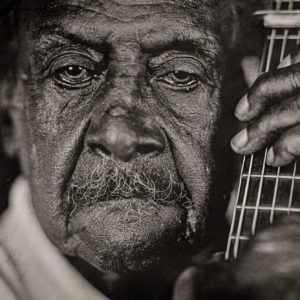
Etta Baker

Silent Strings, Acoustic Blues

“I was immediately taken by her version of Railroad Bill. [Etta Baker] is the greatest influence on my guitar playing.” - Taj Mahal

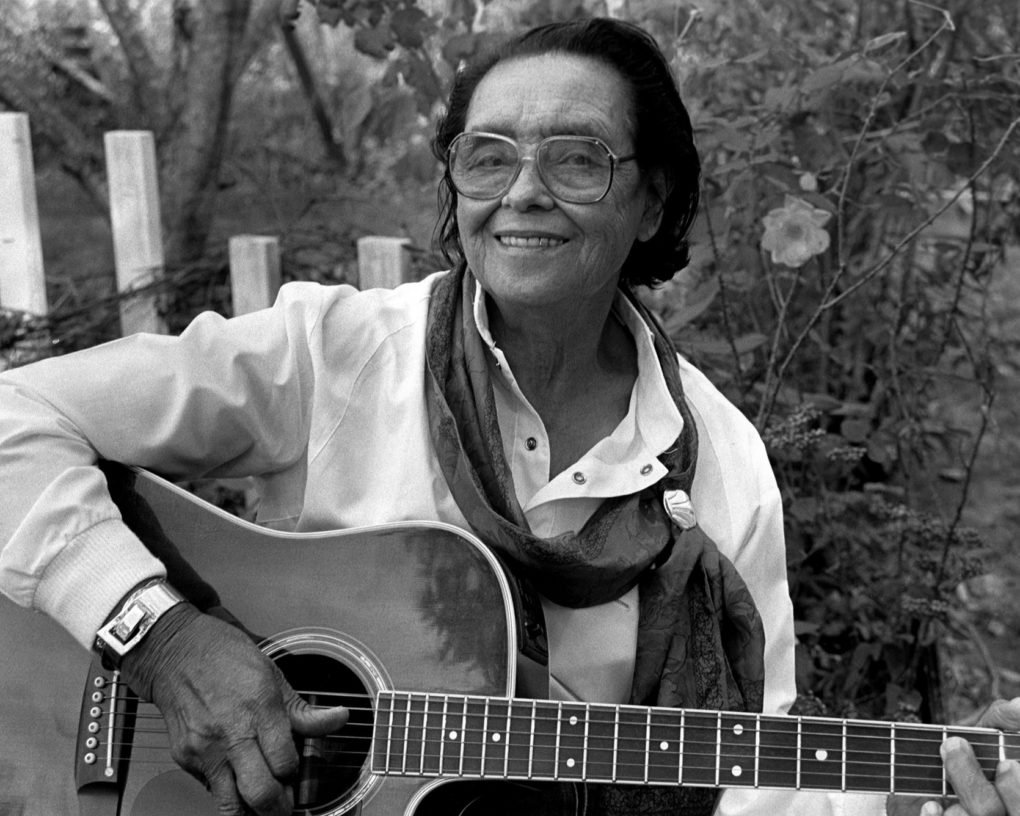
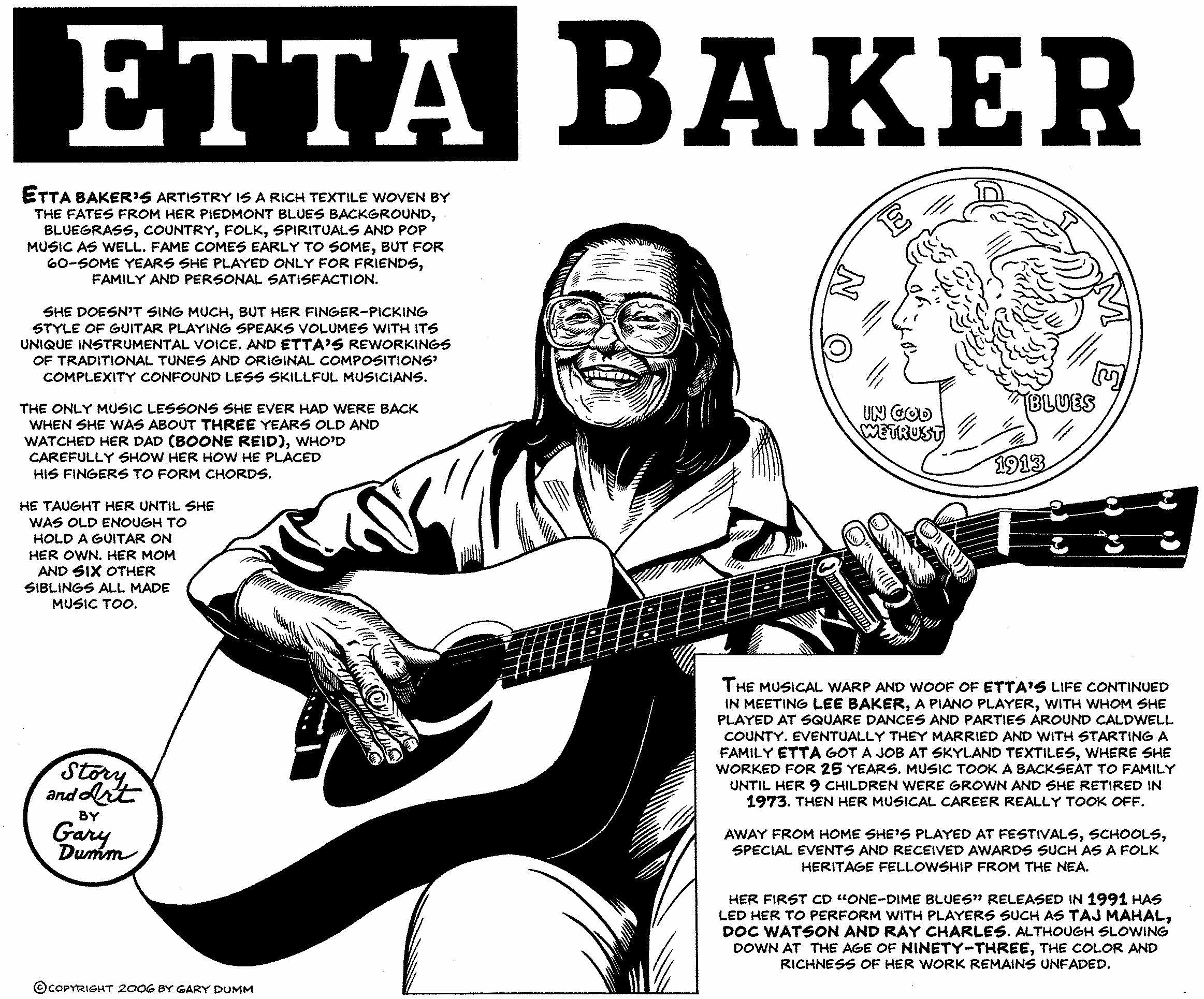
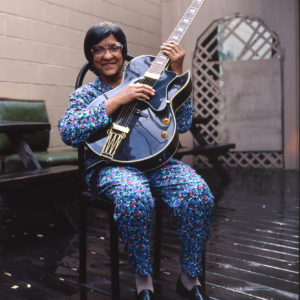
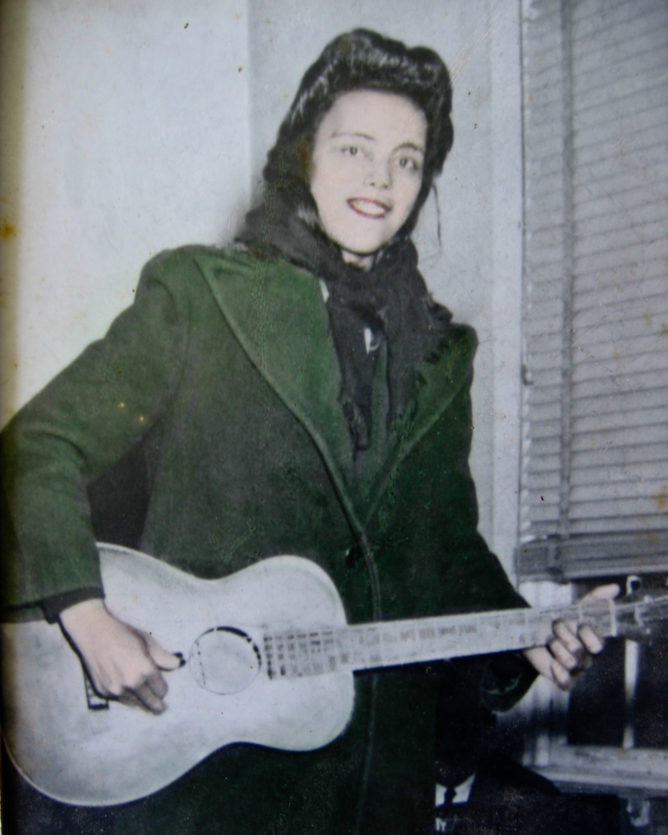
Etta Baker worked in a textile mill, raised nine children, and didn’t take her music to the stage until she was 60 years old. Fortunately for all of us, she continued to play and record right up until her death in 2006 at the age of 93.

Born: March 31, 1913,  Caldwell County, North Carolina
Repertoire Summary: Piedmont Blues

“I was immediately taken by her version of Railroad Bill. [Etta Baker] is the greatest influence on my guitar playing.” - Taj Mahal

Etta Baker worked in a textile mill, raised nine children, and didn’t take her music to the stage until she was 60 years old. Fortunately for all of us, she continued to play and record right up until her death in 2006 at the age of 93.

Born: March 31, 1913,  Caldwell County, North Carolina
Repertoire Summary: Piedmont Blues

More about Etta:
Etta Baker was born in 1913 to a musical family in the North Carolina foothills of Appalachia, a musical and racial crossroads. She claims a mix of African-American, white and Native American blood. She grew up in Morganton, where races were not as tightly divided as they were in the cotton and tobacco land down East. “Where we lived was a white section,” Etta explained in an interview on NPR in 2005, “but everybody was one family. I played with my sister Cora and Daddy at big dances for both white and blacks.”

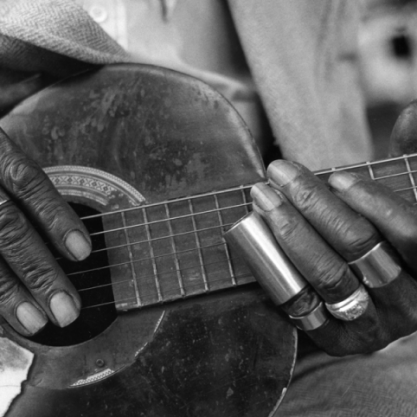
Baker’s music reflects the open atmosphere in which she learned to play. African-American blues, white country picking and English fiddle tunes blend and erupt in her unique style of finger work on both guitar and banjo. Baker’s father, Boone Reid, played his own style of clawhammer banjo and loved to pick up the guitar to play the blues. When Etta took up guitar at the age of three, he passed on that mix of mountain music and deep-felt Piedmont blues to his daughter. Over the course of her lifetime, that daughter became on of the finest finger-style Piedmont Blues guitarist to come out of North Carolina. She was easily identified by her use of a steady baseline wrapped with lilting melodies. Later in life, Baker also returned to banjo, diligently replicating and bringing new attention to the banjo music of Boone Reid.

While today’s charts make a big fuss over “cross-over” artists, living side by side with bluegrass and blues, Etta Baker didn’t keep them separate. In a review of Baker’s music for All Music Guide, Jason Akeny writes about her playing style and praises her as “among the foremost practitioners of acoustic Piedmont guitar fingerpicking, an open-tuned style not far removed from bluegrass banjo picking; however” he adds, “for decades only relatives and friends ever heard her play, as she confined her performances solely to family gatherings and parties.”

Listening to Baker’s talent, the first question that comes to mind is why didn’t she get onto the stage earlier. To understand this, you need to understand how life was in the Carolina’s for people who were living a hardscrabble life of farming and mill work. Opportunities for music were local not national. Skilled musicians played with family, for local dances, at church, or may be in a nearby town. The exceptions, such as the famous Carter Family from Poor Valley, Virginia, chose to risk everything on the music business and experienced a wild ride of ups and downs. “My husband could play piano real well,” Baker reflects. “I believe we could have made it, but as he did not want to leave home, there was nothing I could say.”

If this deference sounds out of character, remember that families were large and interdependent. Money from music was a long shot. Going into the textiles mills, as Etta Baker did, might be low pay but it was sure pay. Not everyone had the ambition and that touch of madness that moved A.P. Carter to drag an entire family out on the road. And staying home certainly did not mean giving up music. Baker kept on playing along with her father and her sister, Cora. Their lack of stage experience was no measure of the quality of the music.

Proof of this came in 1956 – which puts Etta in her 40’s. That year, the patriarch, Boone Reid, took the whole extended family on an outing to Cone Mansion. Walking the place, Reid spotted a guy with a guitar over his shoulder. Being a man of music, and proud of Etta, he asked if the man would like to her his daughter play. That man was Paul Clayton, a song-collector and folklorist. “I played a song I had put together,” Etta remembers, “One Dime Blues, and Paul was amazed. He got directions to our home and he was over the next day with his tape-recorder along with Liam Clancy and Diane Hamilton.”

As a result of that afternoon, the folklorists included Etta and Boone on Hamilton’s next record project, Instrumental Music from the Southern Appalachians. That’s where Etta Baker first showed off her finger-style guitar playing to a world way wider than her family home. It was one of those songs, Railroad Bill, that caught the ear of Taj Mahal, a college kid at UMASS. He was visiting a friend in the dorms of Bard College when he heard the recording playing in someone’s room. “That chord in Railroad Bill is a very ancient root chord,” Taj explains. “it strikes straight through me, every time I hear it played.” Elaborating on the moment that pushed his own commitment to music deeper inside, Taj adds, “Those older chords seem like you can see right through them back to the past.”

It’s impossible to speculate on what earlier fame might have meant to Etta Baker, but clearly her hand, her guitar and banjo music, began to influence the music scene of the 1960’s. Paul Clayton became a conduit, funneling the folk scene down into the south. He owned a cabin outside Charlottesville, Va., and when his New York friends came to visit, he would treat them to a trip to the Carolina to hear Etta Baker play. Bob Dylan and Susie Rotolo celebrated Dylan’s 21st birthday listening to Etta and returned to New York where Dylan rewrote one of Paul Clayton’s songs, Whose Going to Buy You Ribbons When I’m Gone, taking Baker’s guitar work and creating the now famous Don’t Think Twice, It’s All Right.

For many years after Clayton’s visit, the Bakers received no payment for Etta’s recordings. “Back then we just did not know what to do about it,” Etta admits. She stayed home, committed to her husband and to the work of raising nine children. She tended her garden, and worked in the mill. All that time, her music continued to circulate, emerging in the finger work of bluesmen like Taj Mahal.

In the early 80’s, after her children were grown and her husband passed, Etta decided to make a change. She began to make music her profession, cutting her first album at the age of 78. In 1992, Baker put out her own album, One Dime Blues, on Rounder, and she was included in the The North Carolina Banjo Collection, a 1998 Rounder release. In 1989, Baker received the North Carolina Folk Heritage Award from the North Carolina Arts Council. In 1991, she received the National Endowment for the Arts’ National Heritage Fellowship, and, in 2003, the North Carolina Award.

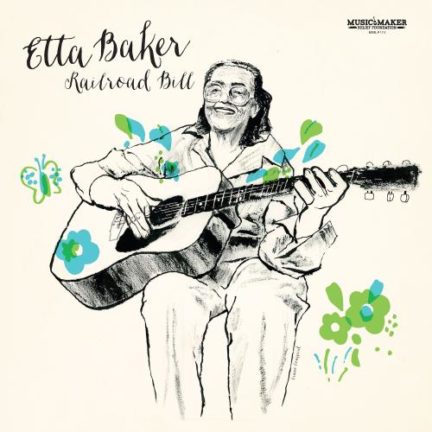
In 1995, Baker hooked up with Tim Duffy and the Music Maker Relief Foundation. Duffy, something of a musical match-maker, pulled Etta into a studio in Pinnacle, North Carolina along with her secret protege, Taj Mahal. They were joined by Etta’s blues-playing friends, Algia Mae Hinton and Wayne Martin. Those sessions were released in 2004 on the recording, Etta Baker with Taj Mahal. In 1998, Music Maker recorded a series of sessions with Baker, released in 1999 on a recording named after the song that inspired Taj Mahal, Railroad Bill.

Etta Baker came out of the mountains and took center stage. Through Music Makers, she became part of a professional system that promoted her music and paid her for her work. Duffy even included two recordings of Boone Reid to round out the 2004 project, paying tribute to the family roots in her music. In 2005, Music Maker recorded a second project that included the other Baker sister, Carolina Breakdown with Cora Phillips, and released the posthumous album Etta Baker Banjo, in 2009, a commemoration of that blend of blues and bluegrass is her signature.

For those who lament Baker’s late entry into the world of records, tours and stage, it is wise to remember that Baker did not abide by regret. She made her decisions clear and loved all sides of it. Giving her the last word, this is how Baker sums up the story, “I raised family of 9 children and I didn’t travel much in raising a family – I worked at the Buster Brown plant for about 26 years and there was a man came down from Portland Oregon and he said you oughta pick up your guitar and quit work. Well I thought about that was on a Wednesday and Friday I quit. Went to the office and told them I was quitin’. And I did. And I’ve enjoyed every day since.”

-Written by Susan Simone

Read More

Career Highlights

  • Baker Awarded by the N.C. Arts Council

    In 1989, Baker was awarded the North Carolina Heritage Award by the N.C. Arts Council.

  • Baker Recieves Most Prestigious N.C. Award

    In 2003, Baker was awarded the North Carolina Award for Fine Arts. This award, sometimes referred to as the “Nobel Prize of North Carolina,” is the highest civilian award granted by the state of North Carolina.

  • Baker Wins Brown-Hudson Folklore Award

    In 1982, the North Carolina Folklore Society presented the Brown-Hudson Folklore Award to Etta Baker and her daughter, Cora Phillips, for their contributions as folk musicians.

  • Lifetime Honors

    In 1991, Etta Baker became the recipient of a National Heritage Fellowship, the highest cultural award of the National Endowment for the Arts (NEA).

Discography

  • Banjo
    Banjo
  • Carolina Breakdown
    Carolina Breakdown
  • Etta Baker with Taj Mahal
    Etta Baker with Taj Mahal
  •  
  • Railroad Bill
    Railroad Bill

Upcoming Events